
Meniscal Tear
Mr Dennis Kosuge is a Consultant Orthopaedic Surgeon with a specialist interest in knee conditions, including meniscal (cartilage) tears. This page explains what a meniscal tear is, why it happens, how it is diagnosed and the treatment options, both non-surgical and surgical. Mr Kosuge sees and treats patients with meniscal tears at The Rivers Hospital in Sawbridgeworth (private) and The Princess Alexandra Hospital, Harlow (NHS), serving patients from across West Essex and East Hertfordshire.
Frequently Asked Questions about Meniscal Tears
What are the symptoms of a meniscal tear?
How is a meniscal tear diagnosed?

Mr Kosuge’s Patient Information Leaflet on Meniscal Tear. Please click on image to access the leaflet.
What is a Meniscal Tear?
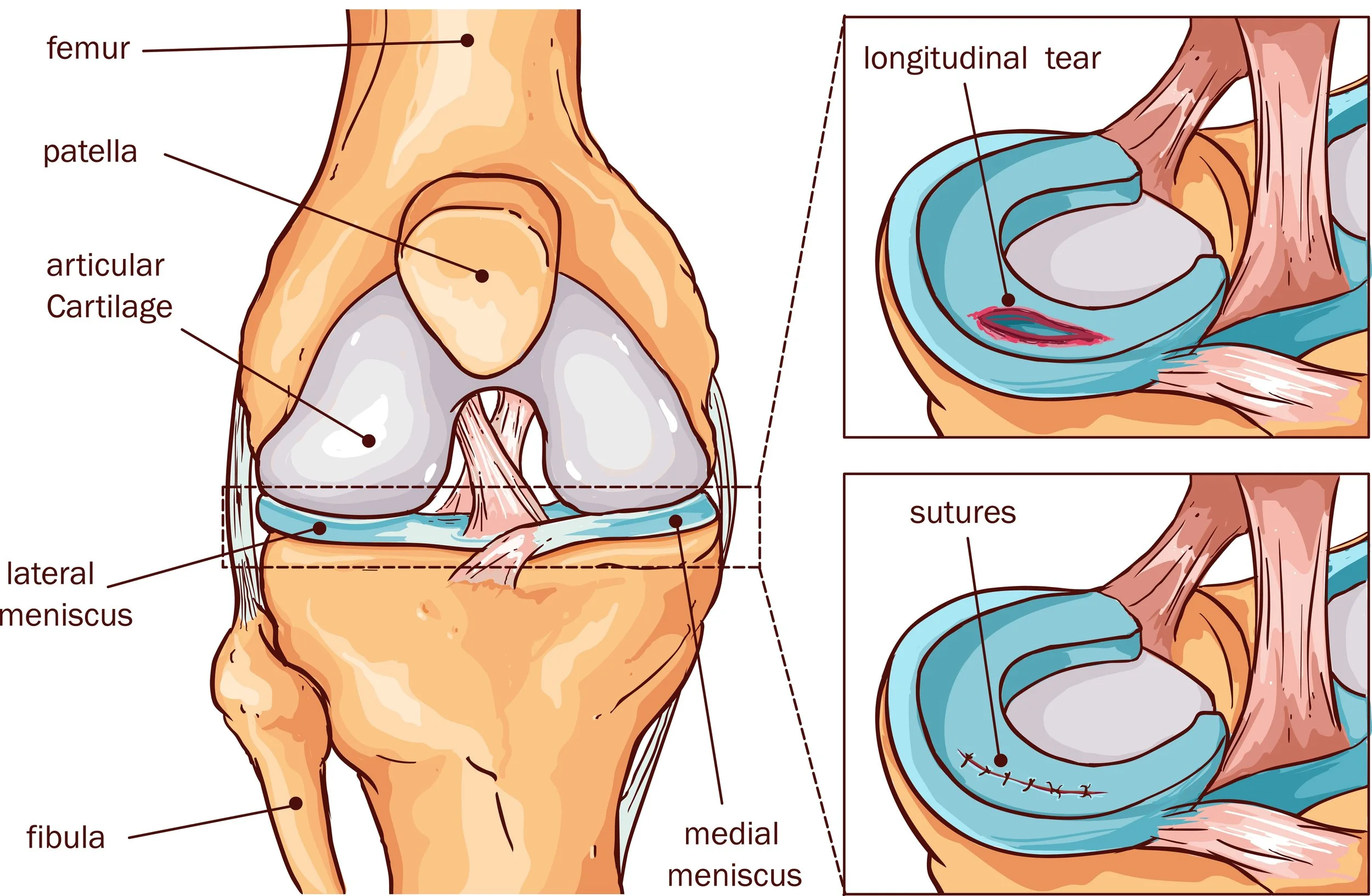
The knee contains two wedge-shaped pieces of cartilage called the menisci — the medial meniscus on the inner side of the knee and the lateral meniscus on the outer side. These structures act as shock absorbers, distribute load across the knee joint, and help to keep the joint stable and lubricated.
A meniscal tear is one of the most common knee injuries seen in orthopaedic practice. Tears can occur in two quite different ways: acutely, through a sudden twisting or compressive force — often during sport — or gradually, as part of the normal ageing process in which the cartilage becomes less resilient over time. These two mechanisms produce different types of tear and are managed differently.
Mr Dennis Kosuge is a Consultant Orthopaedic Surgeon with a specialist interest in knee conditions, including meniscal pathology. He sees patients at The Rivers Hospital in Sawbridgeworth (private) and The Princess Alexandra Hospital, Harlow (NHS), drawing patients from across West Essex and East Hertfordshire.
What are the symptoms of a meniscal tear?
Symptoms can vary depending on the type and severity of the tear but typically include one or more of the following:
Pain along the inner or outer joint line of the knee
Swelling, which may develop within hours of an acute injury or more gradually
Stiffness and a reduced range of movement
A clicking, catching or locking sensation within the knee
A feeling that the knee is giving way or is not fully reliable
In acute tears, an inability to fully straighten the knee (locking) — this requires prompt assessment
How is a meniscal tear diagnosed?
Diagnosis is based on a careful clinical history and examination of the knee. Mr Kosuge will assess for tenderness along the joint line and perform specific clinical tests that help to identify whether the meniscus is injured.
An MRI scan is the imaging investigation of choice. It allows Mr Kosuge to confirm the diagnosis, identify the type and precise location of the tear, and assess the rest of the knee — including the articular cartilage, ligaments and bone — before making a treatment recommendation.
Types of meniscal tear
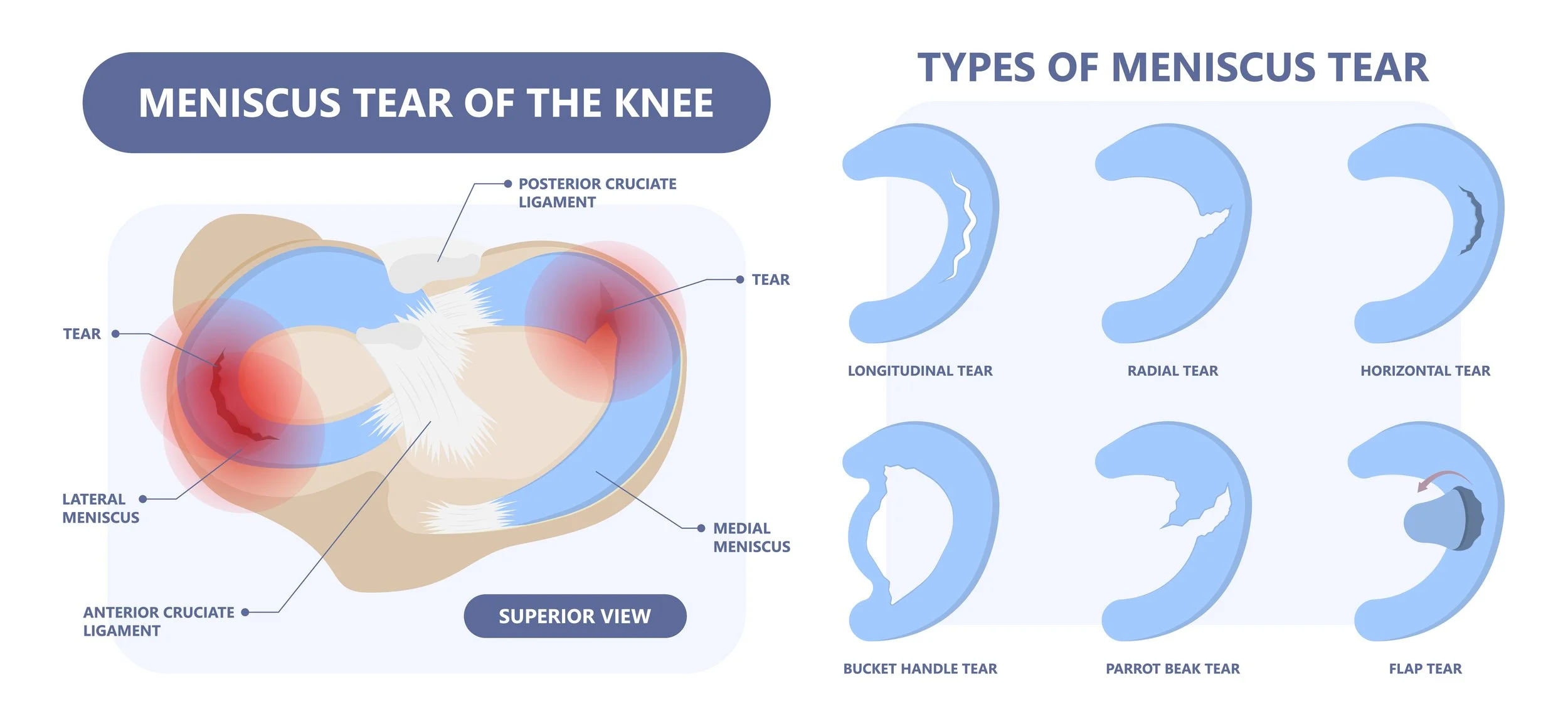
Not all meniscal tears are the same, and the type of tear significantly influences treatment. Common tear patterns include horizontal, radial, vertical (longitudinal), and complex tears. A bucket-handle tear — a large vertical tear that displaces into the joint — is a specific pattern that often causes the knee to lock and usually requires surgical treatment. Degenerative tears, which occur in the context of age-related wear, are managed differently from acute sports injuries.
Can a meniscal tear be treated without surgery?
Mr Kosuge's approach begins with non-surgical management wherever appropriate. Many meniscal tears, particularly degenerative tears in middle-aged or older patients, can be managed effectively without an operation. Treatment options include:
Physiotherapy and targeted exercises to strengthen the muscles supporting the knee
Activity modification to reduce symptoms during recovery
Anti-inflammatory medication to control pain and swelling
A period of relative rest, followed by a graduated return to activity
Surgery is considered when a tear is causing significant mechanical symptoms — particularly locking — when the tear is in a younger patient and suitable for repair, or when a reasonable period of conservative management has not produced adequate improvement. Mr Kosuge will discuss all options at your consultation.
When is surgery recommended?
Arthroscopic (keyhole) surgery for a meniscal tear is recommended in specific circumstances: when the knee is locking, when conservative treatment over an appropriate period has not resolved symptoms, or when the tear is in a younger patient in a location that may be suitable for repair. Mr Kosuge performs knee arthroscopy for meniscal tears at The Rivers Hospital, Sawbridgeworth, as a day-case procedure.

Mr Kosuge’s Patient Information Booklet on key-hole surgery of the knee. Please click on image to access the booklet.
More Frequently Asked Questions:
-
The outer third of the meniscus has a blood supply and some capacity to heal. Tears in this zone, particularly in younger patients, may heal without surgery or be suitable for repair. The inner two thirds have little blood supply and do not heal naturally. Whether conservative management is appropriate depends on the type, size and location of the tear, your age, activity level and symptoms.
-
This varies considerably depending on the type of tear and the individual patient. Many degenerative tears improve meaningfully over 6 to 12 weeks of appropriate physiotherapy and activity modification. Acute tears in younger patients may take longer and may not fully resolve without surgery if the tear pattern is not amenable to healing.
-
A bucket-handle tear is a large vertical tear of the meniscus that displaces into the joint like the handle of a bucket. It often causes the knee to lock — preventing full straightening — and typically requires prompt surgical treatment. Mr Kosuge will identify this pattern on MRI and discuss the most appropriate surgical approach.
-
The medial meniscus sits on the inner side of the knee and is more commonly torn. The lateral meniscus sits on the outer side. Treatment is broadly similar but the anatomy differs — factors that influence whether the tear can be repaired. Mr Kosuge will explain which meniscus is affected and what this means for your management.
-
The meniscus plays an important role in protecting the knee joint. Removal of meniscal tissue can accelerate the development of osteoarthritis in the affected compartment over time. This is one reason Mr Kosuge aims to preserve as much meniscal tissue as possible, and will consider repair rather than removal where the tear type and patient circumstances allow.
-
Low-impact activity — including swimming and cycling — is generally well tolerated and encouraged to maintain muscle strength and joint health during recovery. High-impact activities involving twisting or pivoting should be avoided until the knee has been fully assessed and a management plan agreed. Mr Kosuge is happy to advise you on which activities are appropriate at your consultation.
Book a Consultation
If you are experiencing knee pain and suspect you may have a meniscal tear, Mr Kosuge offers expert assessment and a full range of treatment options at The Rivers Hospital, Sawbridgeworth, and The Princess Alexandra Hospital, Harlow. Private consultations are available for self-pay and insured patients.
To book an appointment, please call 01279 602675 or use the online booking link below.
NHS patients may be referred by their GP to The Princess Alexandra Hospital, Harlow.