Torn Meniscus (Cartilage Tear): The Symptoms and When Surgery Is Actually Needed

A torn meniscus is one of the most common knee injuries and one of the most misunderstood. Many patients arrive at consultation assuming a tear always needs an operation. Often it does not. Mr Kosuge sees this frequently, so it is worth setting out what a meniscal tear is, what it feels like and how the decision to operate is actually made.

What the meniscus is

Each knee has two menisci, which are wedges of tough cartilage that sit between the thigh bone and the shin bone. They act as shock absorbers and help the knee move smoothly and stay stable. A tear can happen suddenly, for example twisting on a planted foot during sport, or it can develop gradually as the cartilage wears with age. The two situations are quite different. That difference matters for treatment.

The symptoms to look out for

A meniscal tear typically causes pain along the joint line, swelling that comes and goes and a sense that the knee is not quite reliable. Some people notice clicking or catching. In more significant tears the knee can lock, which means it becomes stuck and will not fully straighten. Locking is one of the clearer signals that surgery may be needed.

Why many tears do not need an operation

Where a tear is degenerate, meaning it is part of gradual wear rather than a fresh sports injury, good evidence shows that surgery often adds little over a course of physiotherapy, activity adjustment and time. The body can settle a great many of these tears without an operation. Removing torn cartilage is not without consequence either, because the meniscus is there for a reason and taking it away can load the joint differently. For these reasons Mr Kosuge does not rush to operate on every tear that shows on a scan.

When surgery does make sense

Surgery, usually a keyhole (arthroscopic) procedure, becomes the sensible option when a tear is causing true mechanical symptoms such as a locked knee, when a specific type of tear in a younger patient is repairable, or when a reasonable period of non-surgical treatment has not settled the symptoms. The key is matching the treatment to the tear and to the person, rather than to the scan alone.

Getting the right assessment

If your knee is painful, swelling or catching, an accurate diagnosis is the first step. That usually means an examination and often an MRI scan. Mr Kosuge will explain exactly what has been found and set out the options honestly, including the option of not operating.

To book an appointment with Mr Kosuge at The Rivers Hospital:

Robotic-Assisted or Conventional Knee Replacement: What Is the Difference and Does It Matter?

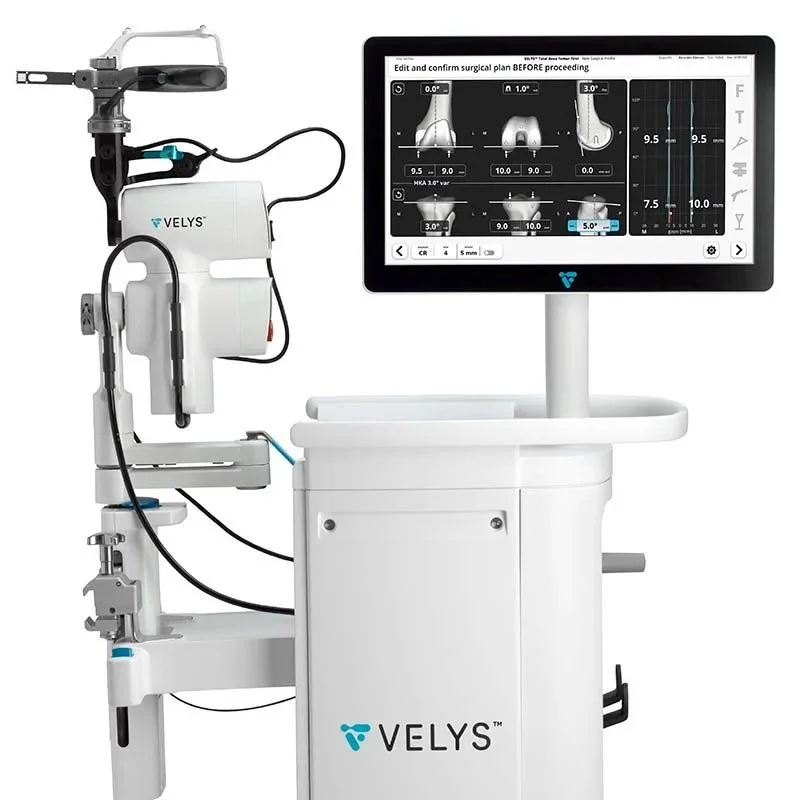
The VELYS™ Robotic-Assisted Solution has now been formally introduced at The Rivers Hospital and Mr Kosuge started performing robotic-assisted total knee replacements this week. It is a good moment to answer the question he is asked most often, which is a fair one. Is a robotic knee replacement better than a conventional one and is it the right choice for you? It is worth answering plainly, because the marketing around robotics can make the decision sound more dramatic than it is.

What "conventional" knee replacement actually means

A conventional total knee replacement is a very well-established operation with an excellent track record. The worn surfaces of the knee are removed and replaced with metal and plastic components and Mr Kosuge uses precise instruments, measurements and experience to position them. The great majority of these replacements perform well for many years. When people worry that "conventional" means old-fashioned, that is not the case. It remains the operation that the long-term registry data is built on.

What the robot adds

Robotic assistance does not replace the surgeon. Mr Kosuge remains in control of the operation throughout. What the system adds is a detailed plan and real-time feedback. Before and during surgery, it builds a picture of your individual knee. It then helps position the implant and balance the soft tissues to Mr Kosuge’s plan with a high degree of accuracy. In published work the VELYS system has been shown to place components within a few degrees of the intended alignment very consistently.

Does more precision mean a better result for you?

This is the honest part. Better alignment and balance are sensible goals and early studies have reported benefits such as improved mobility and shorter hospital stays. What has not yet been proven is that a robotic knee lasts longer than a well-performed conventional one over fifteen or twenty years, because that evidence will take longer to gather. So the fair summary is that robotic assistance is a genuine advance in accuracy and consistency, rather than a guarantee of a different outcome for every patient.

Who benefits most

Robotic assistance can be particularly useful where the anatomy is more challenging or where fine soft-tissue balancing matters. For many patients either approach in experienced hands will give an excellent result. The most important factor remains the surgeon and the whole team around the operation, not the tool alone.

Discussing your options

Mr Kosuge offers both conventional and VELYS robotic-assisted total knee replacement at The Rivers Hospital and will talk through which is more appropriate for your knee at consultation. You can review his published outcome data:

To book an appointment with Mr Kosuge at The Rivers Hospital: