When Can I Drive Again After a Hip or Knee Replacement?

This is one of the first questions almost every patient asks and it is an important one, because driving is tied up with independence and getting back to work. The honest answer is that there is no single fixed date. It depends on which side was operated on, the type of car, how your recovery is going and, above all, whether you can drive safely. Here is how Mr Kosuge advises patients to think about it.

There is no fixed legal time, but there are clear conditions

In the UK there is no law that states an exact number of weeks before you may drive after joint replacement surgery. What matters is that you are back in full control of the car. You must be able to sit comfortably, operate the pedals without hesitation and perform an emergency stop with full force and no pain. You must also no longer be taking strong pain medication that could affect your reactions. Until all of those are true, you are not ready.

Which side matters and so does the car

Recovery of driving readiness tends to be quicker after surgery on the left leg in an automatic car, because the left leg does less of the work. Surgery on the right leg, or driving a manual, usually takes longer, because the operated leg is doing more. As a general guide many patients are ready somewhere between four and eight weeks, but this is a guide and not a target. Some are ready sooner and some later.

Tell your insurer

It is sensible to inform your car insurer that you have had surgery before you return to driving. Policies vary. Confirming that you are covered avoids any difficulty in the event of a claim. Your insurer may also ask that your surgeon or GP has confirmed you are fit to drive.

A simple test

A practical check, once you feel ready, is to sit in a stationary car and practise moving your foot firmly to the brake as though stopping in an emergency. If you can do this quickly, firmly and without pain while off strong painkillers, you are close. If it makes you hesitate, you are not.

Confirming you are ready

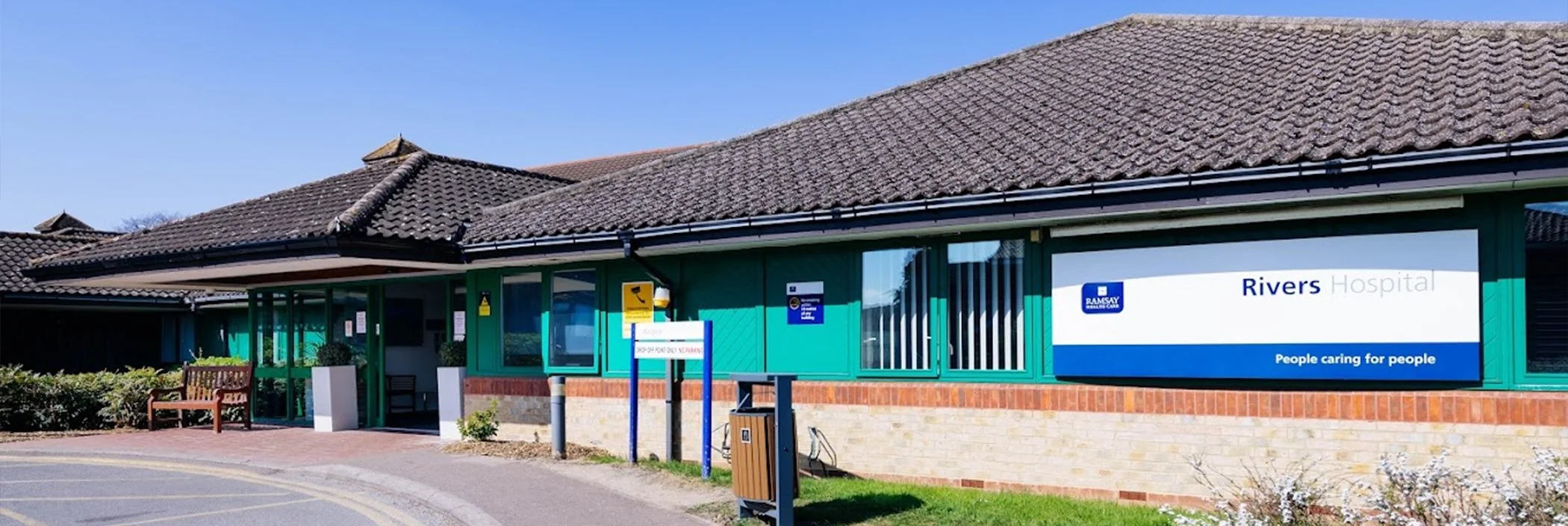
Mr Kosuge will give you personalised advice on returning to driving at your follow-up, based on your operation and your progress. To arrange a consultation or follow-up at The Rivers Hospital, High Wych Road, Sawbridgeworth CM21 0HH:

How Much Does Private Hip or Knee Replacement Cost and How Does Self-Pay at The Rivers Hospital Work?

For many people the decision to go private comes down to a practical question they feel awkward asking. What does it cost and how does paying for it actually work? Mr Kosuge believes patients should have this set out plainly, so that cost is a clear factor in the decision rather than an anxious unknown. This article explains how private hip and knee replacement is paid for. It does not quote a figure, because an accurate price depends on your individual circumstances and is best given as a written quote.

The two main routes: insurance and self-pay

Most patients pay in one of two ways. If you have private medical insurance, your treatment may be covered, subject to your policy and any excess. Mr Kosuge is recognised by the major insurers. The sensible first step is to contact your insurer to confirm what your policy covers before you proceed. The team can help you obtain the relevant procedure code you will need. The second route is self-pay, where you fund the treatment yourself. This is more common than many people expect. It does not require you to have insurance at all.

How self-pay usually works

Self-pay private surgery is normally arranged as a fixed-price package. The value of a package is that it brings the main costs together into one agreed figure, so there are fewer surprises. A typical package covers the surgeon's fee, the anaesthetist's fee, the hospital stay, the implant and the routine aftercare associated with the operation. It is always worth confirming exactly what is and is not included, for example the initial consultation, any scans and the physiotherapy that follows.

What affects the cost

The price of a joint replacement depends on the specific procedure, the implant used, the length of stay and your individual medical circumstances. This is precisely why a single headline figure can be misleading and why The Rivers Hospital provides a tailored quote once your needs are understood.

Getting a clear quote

The most useful thing you can do is start with a consultation. That gives you an accurate diagnosis, a clear recommendation and a written, itemised quote you can consider without pressure. Whether you plan to use insurance or to self-pay, the team can guide you through the process.

To arrange a consultation with Mr Kosuge at The Rivers Hospital, High Wych Road, Sawbridgeworth CM21 0HH: